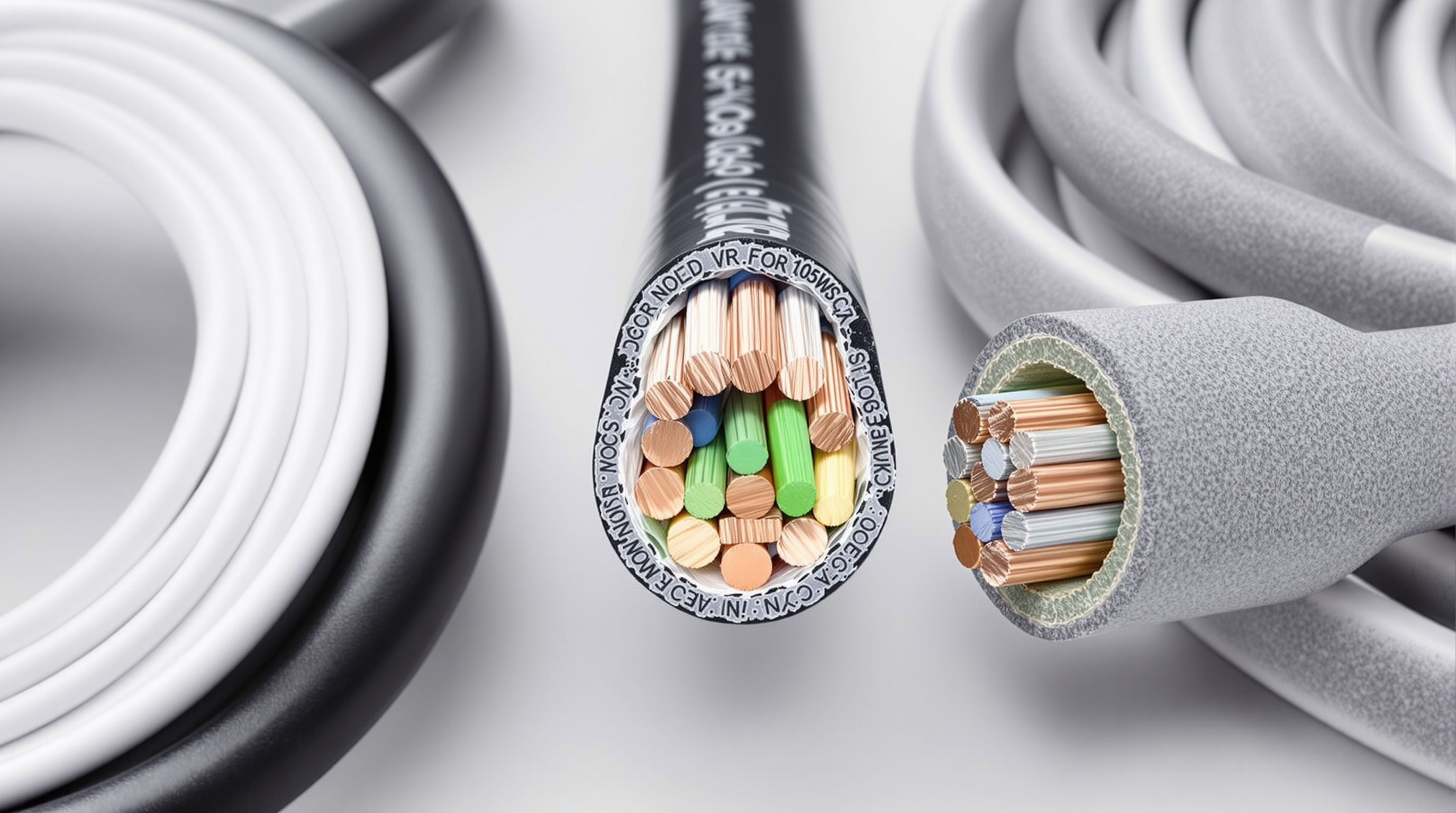
OSHA 1910.305(g) addresses flexible cords and cables through several connected questions: the conditions of use, the permitted application, the route, identification and the way the cord terminates. A cord description is therefore only part of the workplace question. Reading the provisions in sequence helps distinguish the product being considered from the proposed use and the details of its connection.
Under OSHA 1910.305(g)(1)(i), flexible cords and cables must be approved for the conditions of use and location. OSHA's following paragraphs then identify permitted uses and restrictions. A type marking and an application description answer different questions; neither should disappear from the review simply because the other is available.
Permitted Uses
OSHA 1910.305(g)(1)(ii) lists pendants, fixture wiring, connections for portable lamps or appliances, portable and mobile signs, elevator cables, and wiring for cranes and hoists among the permitted uses. OSHA's list also covers connecting stationary equipment to facilitate frequent interchange, preventing transmission of noise or vibration, and appliances whose fastening means and mechanical connections are designed to permit removal for maintenance and repair.
OSHA additionally lists data processing cables approved as part of the data processing system, connections of moving parts, and temporary wiring as permitted in paragraph (a)(2). That last wording is a cross-reference to a particular provision, rather than an unrestricted category for any arrangement described as temporary.
For the portable-lamp or appliance, frequent-interchange, and maintenance-removal uses in paragraphs (C), (G) and (I), OSHA 1910.305(g)(1)(iii) requires an attachment plug and energizing from an approved receptacle outlet. OSHA's attachment-plug requirement thus accompanies those specifically identified uses; it belongs alongside the application description when reading the rule.
Uses That Are Not Permitted
Unless specifically permitted otherwise by paragraph (g)(1)(ii), OSHA 1910.305(g)(1)(iv) prohibits flexible cords and cables in the following uses:
- As a substitute for a structure's fixed wiring
- Run through holes in walls, ceilings or floors
- Run through doorways, windows or similar openings
- Attached to building surfaces
- Concealed behind building walls, ceilings or floors
- Installed in raceways, except as otherwise permitted in the subpart
OSHA's wording makes the permitted-use list and the routing restrictions part of the same reading exercise. Describing the equipment as portable does not describe the route between that equipment and the outlet. Consider the application and route separately, then read the applicable OSHA provisions together.
Markings and Identification
OSHA 1910.305(g)(2)(i) requires a grounded conductor or equipment grounding conductor to be distinguishable from the other conductors. In the same paragraph, OSHA requires the listed cord and cable types to carry durable surface markings at intervals not exceeding 610 mm (24 in.), with the type designation, size and number of conductors.
OSHA's listed cord types include SJ, SJT, SJTO, SO, ST and STO, among others. The cord types and gauge reference gives context for reading the code. OSHA's marking content concerns identification: the type designation, conductor size and conductor count remain separate details even when printed together. Reading all of them preserves the distinction between the cord family and its particular construction.
Splices, Taps and Strain Relief
OSHA 1910.305(g)(2)(ii) sets the general requirement that flexible cords be used only in continuous lengths without splice or tap. OSHA allows hard-service and junior hard-service cord No. 14 and larger to be repaired if the splice retains the insulation, outer sheath properties and usage characteristics of the cord being spliced.
OSHA's repair exception is conditional on both the cord category and size, and the retained properties of the splice. It is not enough to read the word repair without the conditions that follow it. The OSHA paragraph distinguishes the general continuous-length requirement from that limited exception.
OSHA 1910.305(g)(2)(iii) also requires connections to devices and fittings to provide strain relief that prevents pull from being transmitted directly to joints or terminal screws. The strain relief reference explains the cable-to-connector junction. Identification, the condition of the cord length and the termination are related checks, but each addresses a different part of the assembly.
Reading the Rule Alongside Product Standards
For extension cords, CPSC 16 CFR 1120.3(d) lists sufficient strain relief among specified UL 817 characteristics whose absence makes a cord a substantial product hazard. The extension cord reference describes that product rule and its other listed characteristics. OSHA's workplace provisions address the application and connection as well as identification. Keeping the CPSC product characteristics alongside the applicable OSHA provisions avoids treating a product description as the complete answer to a workplace-use question.